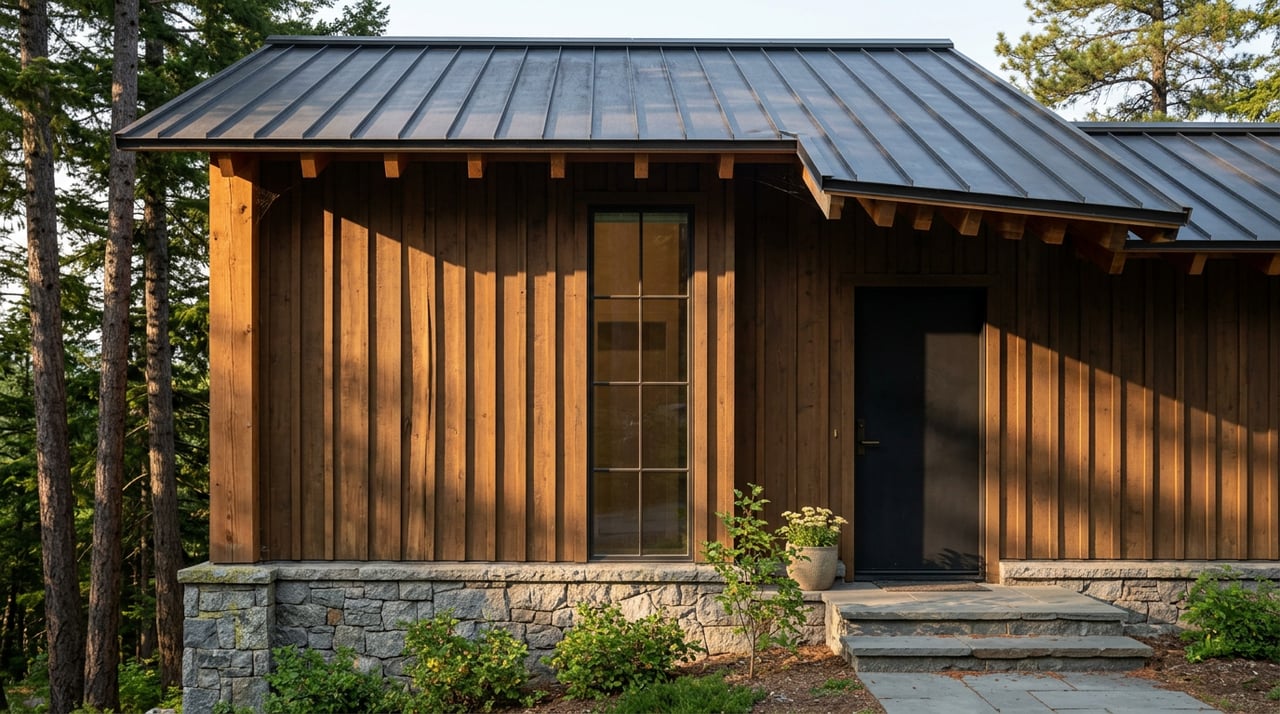
What "Ski-In/Ski-Out" Actually Means at Whitefish Mountain Resort
July 9, 2026
July 9, 2026
Two condos on Big Mountain can carry the same list price, the same square footage, and the same three words on the listing sheet, and still deliver two different ownerships. One skis to Chair 6 in ninety seconds. The other requires a boot-pack across a parking lot and a shuttle stop to reach the same lift. Both are marketed as ski-in/ski-out.
The label is doing a lot of work at Whitefish Mountain Resort right now, and it is worth pulling apart. A buyer comparing slope-side inventory in mid-2026 is looking at 131 active listings tagged to the resort area, a broader Whitefish market where the Zillow Home Value Index reads $816,768 and is down 7.1% year-over-year, and a resort-adjacent luxury tier that other analysts place above $1.3 million. Somewhere between those two numbers sits the condo you are actually considering. Price per square foot will not tell you which side of the line it falls on.
At Whitefish Mountain Resort, three things move independently of one another and independently of price:
A buyer who evaluates all three before writing an offer ends up with a very different shortlist than a buyer who sorts by beds, baths, and headline square footage. The rest of this post is an argument for that framework.
"Ski-in/ski-out" at Big Mountain covers a spectrum from true door-to-lift access to a walk that becomes an ordeal in ski boots with a four-year-old. The specific runs and chairs matter, because a run's angle, sun exposure, and grooming schedule determine whether the return trip works for your household or requires the shuttle.
A few reference points from current and recent inventory on the mountain:
| Building or address | Access point | Notes |
|---|---|---|
| 325 Moose Run Drive | Chipmunk (Chair 6) and Home Again | 3,030 sf townhome, three private decks, marketed as a proven winter rental sleeping 14+ |
| 398 Moose Run Drive | Home Again ski trail | End unit in a triplex, three bedroom suites on separate floors |
| Morning Eagle at 3893 Big Mountain Rd | Village core | Northeast corner penthouse with the largest private deck in the building; sunrise-to-sunset exposure over the slopes |
| Ptarmigan Village | Roughly five minutes from the base | Community pools, hot tubs, tennis; a more accessible entry point to the ski-access market |
The Village-core buildings like Morning Eagle put you inside walking distance of Kandahar Lodge, Buchanan's Chop House and Whiskey Bar, The Snug, the Bierstube, Hell Roaring Eatery, and the Village Market. The Moose Run addresses put you on a specific chair with a specific run home. Ptarmigan Village exchanges door-to-lift access for space, amenities, and a materially lower entry point. All three of these show up in ski-in/ski-out search results. Only one of them is literally that.
The practical test is the return trip. Ask which run delivers you home, whether that run holds snow into late season, whether it grooms nightly, and where you have to click out. A listing agent who cannot answer those four questions in a specific unit's context is describing a building, not a home.
The second variable is the one that surfaces in year three, not year one. Slope-side ownership at Whitefish Mountain Resort involves weather that punishes exterior finishes, roofs that carry Montana snow loads, and driveways that ice fast on a north-facing grade. Someone is paying for that maintenance. The question is whether it is prefunded through dues and reserves or backfilled through special assessments.
At the new end of the market, Powder Peak markets a dues structure that folds in exterior maintenance, snow removal to heated driveways, structural insurance, and a capitalized reserve fund from day one, positioned specifically to prevent future special assessments. That is a useful benchmark, not because every buyer wants a new-construction ultra-luxury product, but because it defines the ceiling on what "well-reserved" looks like on this mountain.
The question to bring to any older Village-era condo is simpler than a full financial audit:
Two condos at the same $985,000 list, one at Morning Eagle and one further down the road, can carry monthly dues that differ by several hundred dollars and reserve positions that differ by six figures. Neither shows up in the MLS description.
The third variable is what the unit does when you are not there. Short-term rental viability at Whitefish Mountain Resort is real, but it is not uniform. Chair proximity drives nightly rate. Sleep count drives occupancy in peak weeks. HOA rules drive whether nightly rental is even permitted, and if so, at what minimum stay.
A three-bedroom townhome on Chipmunk and Home Again that sleeps 14 is a different rental asset than a one-bedroom on the same road. Both can be "ski-in/ski-out." Only one produces the kind of gross annual income that changes the underwriting.
The rental context also depends on demand into the resort itself. Enplanements at Glacier Park International Airport were reported up nearly 12% in July 2026, and Glacier National Park itself was tracking at 2.4 million visitors as of August 2026, up 7% year-over-year. Summer income at Whitefish Mountain Resort is not incidental anymore; the mountain now runs a phased summer calendar of lift-served biking, hiking to the summit via the Danny On Trail, and scenic-lift traffic from late June through early September. A slope-side condo that only pencils in the winter is undervaluing half the year.
Anyone underwriting a purchase against pro forma rental income should verify HOA rental rules first, then look at STR concentration and licensing at the specific address, then build the model. In that order.
The Whitefish market data in mid-2026 is genuinely two-tiered, and the resort sits inside the higher tier. The broad Zillow reading of $816,768, down 7.1%, is capturing legacy inventory that priced during peak pandemic fervor and is correcting. The ski-adjacent, downtown-walkable, and lakefront tiers are behaving differently, with median values in that segment reported above $1.3 million and continued competitive bidding on the strongest addresses.
For a resort-condo buyer, the takeaway is not "the market is down 7 percent, wait." It is that the label "Whitefish market" is aggregating two markets that are moving in opposite directions. A well-located, well-reserved, rental-viable ski-in/ski-out condo is not the asset that is correcting. The correction is happening in the inventory that was overpriced against a soft feature set to begin with.
That is why the framework matters more than the headline. Chair, HOA, rental. In that order.
Is every listing marketed as ski-in/ski-out actually ski-in/ski-out? No. The phrase covers everything from a door that opens onto Home Again to a townhome that requires a walk to a shuttle stop. Ask which specific run delivers you home and where you click out at the end of the day.
How much do HOA dues vary across the mountain? Enough to matter. New construction with a mandated reserve position and heated-driveway service sits at one end. Older Village-era buildings without recent reserve studies sit at the other. The gap in monthly cost, and in long-term special-assessment exposure, can rival a mortgage payment.
Does the winter access road change what I should buy? It changes how you live in it. The road climbs, and the resort's own guidance recommends AWD or 4WD for direct mountain access in midwinter. Buyers who plan to be up the hill four months a year weigh that differently than buyers using the unit six weekends and renting the balance.
The buyers who do well at Whitefish Mountain Resort tend to spend more time on chair maps, HOA documents, and rental pro formas than on square footage. If you would like a working shortlist that filters against those three variables before it filters against price, Kimberly Wilson and the Glacier Sotheby's Mountain Office team, based in Kintla Lodge on the Village boardwalk, can walk you through what each address actually delivers. Let's connect.
Stay informed with expert insights, market updates, and lifestyle inspiration from Whitefish and the surrounding Montana communities.
July 16, 2026
July 9, 2026
July 9, 2026
July 9, 2026
July 9, 2026
July 2, 2026
June 25, 2026
June 18, 2026
June 11, 2026
With decades of experience and a commitment to exceptional service, Kimberly is dedicated to helping clients achieve their real estate goals.

Kimberly Wilson
Address 204 CENTRAL AVE WHITEFISH, MT 59937