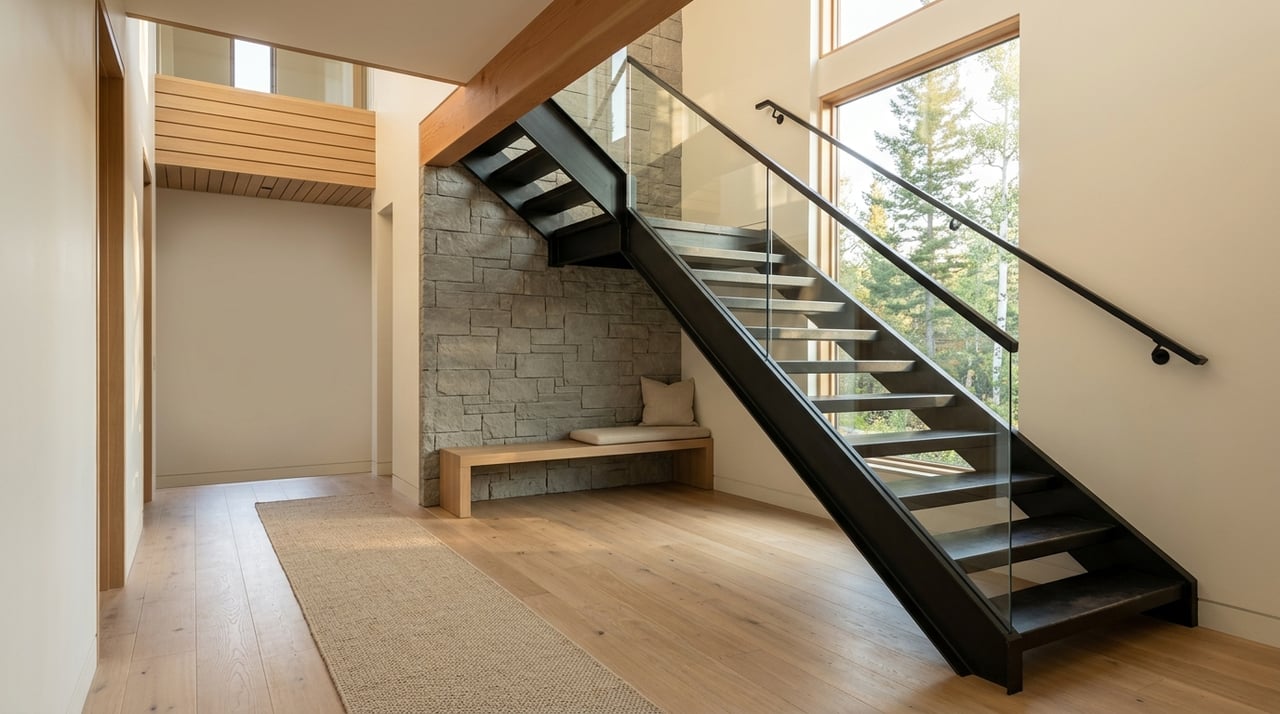
Building Or Buying New In Whitefish
June 25, 2026
June 25, 2026
If you are weighing whether to build or buy new in Whitefish, you are not alone, and the choice is more nuanced here than in many markets. Whitefish offers a distinctive mix of in-town new construction, resort-style residences, and land opportunities outside town, but each path comes with different timelines, costs, and decision points. This guide will help you compare the tradeoffs so you can choose the option that best fits your goals, budget, and lifestyle in Northwest Montana. Let’s dive in.
Whitefish is a premium market with limited supply, which makes the decision to build or buy new especially important. Recent Northwest Montana Association of Realtors data cited by the Daily Inter Lake showed Whitefish’s median sale price rose from $975,000 in 2024 to $996,000 in 2025, while Flathead County’s single-family median rose from $680,000 to $687,000.
That same reporting noted that homes under $1 million fell 4% in the second half of 2025, while homes over $1 million rose 10%. In practical terms, that means many buyers shopping for new construction in Whitefish are already operating in a higher price segment before they factor in land, permits, utilities, and site work.
Housing Whitefish also reported that less than 2% of ownership units in the city are income restricted and that households earning below roughly $130,000 have very limited ownership options. For many buyers, this means the build-versus-buy conversation is less about entry-level access and more about finding the right fit for a move-up, second-home, or lifestyle purchase.
The local supply pipeline gives useful clues about what “new” often looks like in Whitefish. In 2025, Whitefish issued permits for 296 multifamily units and 57 single-family units, including 12 accessory apartments.
That matters because a large share of new opportunities in town may be infill, attached residences, condos, townhome-style product, or higher-density development rather than a wide selection of detached spec homes on large lots. If you picture new construction as a standalone home in a traditional subdivision, your options may be more limited than expected.
Recent reporting also described projects such as Whitefish Yards, a south-entrance annexation proposal, and the Peregrine subdivision. Together, these examples point toward a development pattern that includes redevelopment, mixed residential formats, and a blend of attached and detached housing.
If speed and simplicity matter most, buying a newly built home is often the more direct option. A move-in-ready or near-completion home usually lets you avoid many of the early-stage decisions that come with a custom build.
National Association of Home Builders guidance helps explain why. It describes production builders as using preselected home styles on land they purchased themselves, while custom builders often start with land owned by the buyer and design the home from the ground up.
NAHB also reported that the average U.S. single-family home took 10.1 months to complete in 2023, while homes built for sale averaged 8.9 months. While every market is different, the basic takeaway still applies in Whitefish: buying new is usually the faster route.
When you buy a newly built home in Whitefish, you may benefit from:
For many buyers, especially relocators and second-home purchasers, that convenience can be a major advantage.
Custom building gives you more control over the end result. If you want a particular setting, layout, view orientation, or property type, building can open doors that resale and spec inventory may not.
This can be especially relevant in and around Whitefish, where zoning and land-use patterns range from urban and high-density areas to country, estate, rural residential, and resort-residential settings. That mix creates opportunities for buyers who want something more tailored than typical in-town new construction.
A custom build may be the better fit if you want:
That flexibility is valuable, but it also comes with more complexity.
The biggest difference between buying new and building custom is not just design freedom. It is the number of decisions and approvals required before construction can even begin.
Inside Whitefish city limits, the city is a certified local government for building, plumbing, electrical, mechanical, pool, and WUI permits. Outside city limits, Flathead County’s January 2025 guidance says the county does not administer the Uniform Building Code program or require county building permits for new construction or remodeling, but other approvals still matter.
For parcels outside town, Flathead County says septic approval should be addressed before building. The county also notes that a COSA applies when land is divided into parcels smaller than 20 acres, and if city water is unavailable, DNRC water rights may be needed to drill a well.
The county further advises that a land research request is the first step when you want to understand what a parcel is approved for. That makes land due diligence essential, especially if you are considering country, rural, estate, or view-oriented property.
Before and during a custom project, you may need to work through:
Montana DLI also notes that design professionals may be required for some projects involving moderate to severe snow loads or more complex foundation and structural conditions. In the Whitefish area, that can be an important factor depending on location and terrain.
One of the most common questions is how long it takes to get started. In Whitefish, the answer depends heavily on jurisdiction, site conditions, and project complexity.
Montana DLI says plan review can take anywhere from a few hours to several weeks depending on workload, project size, and needed revisions. It also states that construction may not begin before a permit is issued, though special arrangements may sometimes allow footing or foundation work to begin earlier because Montana has a short construction-weather window.
That timing matters if you hope to enjoy the property on a specific schedule, such as a summer season, ski season, or relocation timeline. If your move date is firm, buying new may provide more certainty.
If your top priority is getting the property exactly right and you have flexibility on timing, building may still be worth the added patience.
In Whitefish, the build-versus-buy decision often overlaps with another choice: do you want the convenience of in-town living or the control that can come with a site outside town?
Based on Whitefish’s zoning and future land-use maps, in-town and near-town opportunities are more likely to be urban, suburban, mixed-use, or higher-density in character. Outside the urban core, you are more likely to encounter country residential, estate residential, rural residential, or resort-oriented parcels that require more site-specific planning.
This creates a practical split. Buying new in town may offer easier access to completed product and city services, while building outside town may offer more privacy, lot choice, and design freedom, but with more work around septic, water, and approvals.
Neither option is inherently better. The right choice depends on how you want to live, how quickly you want to move, and how much complexity you are comfortable managing.
Montana has a statewide residential energy code for all new home construction. According to DEQ, it is easier and less expensive to include high-performance windows, insulation, air sealing, and efficient heating at the beginning of a project than to retrofit those features later.
This is one of the strongest practical arguments for building custom if performance matters to you. It gives you the chance to think about comfort, efficiency, and long-term operating costs from day one.
That said, a newly built spec or move-in-ready home may also benefit from current code standards. The difference is that with a custom build, you usually have more influence over how those features are selected and prioritized.
If you are trying to narrow the choice, start by being honest about your priorities. Most Whitefish buyers are balancing three things: timeline, control, and setting.
Choose buying new if your priority is speed, simplicity, and a more predictable process. Choose building custom if your priority is a particular site, a more tailored home, or a property type that is hard to find in the current in-town inventory.
In Whitefish, that decision also depends on the kind of lifestyle you want. A new in-town residence, resort condo, or attached home may suit one buyer beautifully, while another may be far better served by a private parcel with room for a more personalized design.
If you are considering building or buying new in Whitefish, careful guidance can save time and help you avoid the wrong fit. For tailored insight on neighborhoods, property types, and the local market, connect with Kimberly Wilson.
Stay informed with expert insights, market updates, and lifestyle inspiration from Whitefish and the surrounding Montana communities.
July 16, 2026
July 9, 2026
July 9, 2026
July 9, 2026
July 9, 2026
July 2, 2026
June 25, 2026
June 18, 2026
June 11, 2026
With decades of experience and a commitment to exceptional service, Kimberly is dedicated to helping clients achieve their real estate goals.
Kimberly Wilson
Address 204 CENTRAL AVE WHITEFISH, MT 59937